October 16, 2026
Overall Abundance Score: 76/100
Status: Down two points from Issue 18's 78 on the public site. This week brings a real treatment expansion, but more of the remaining progress is still on a lab bench or in an access pledge; Substack's archive currently ends at Issue 17, so the comparison here follows the site's published sequence.
Executive Summary
An existing bladder-cancer treatment can now reach another group of patients. The FDA's October 14 approval expands Anktiva with BCG to include high-grade papillary-only disease in the specified BCG-unresponsive setting. That earns the lead this week: an option clinicians can actually consider, with the evidence limits kept firmly attached.
The other stories concern the less glamorous work between possibility and usefulness. Plant researchers explain a recognition mechanism. Engineers get a powered material to coordinate its motion. Google pledges scientific model access and compute credits. And a South African team develops a way to read information encoded in shaped light. The missing step differs in every case.
Here's the sober part. An expanded label doesn't settle the best choice for every patient. Understanding a plant receptor doesn't put more food on a plate yet. Coordinated laboratory motion isn't a useful robot, and free compute isn't a published discovery. The optical paper is nine days old, two days outside the preferred weekly window; its October 13 university report brought it into this week's scan.
I like work that makes the next experiment possible. I give more credit when it changes someone's available choices today. Those are different stages of progress, and the score should reflect that.
Watch who can use the result, and what they can actually do with it.
Breakthrough of the Week
Another group of bladder-cancer patients gets a treatment option

What happened: On October 14, the FDA expanded Anktiva with BCG for adults with BCG-unresponsive non-muscle invasive bladder cancer to include high-grade papillary-only tumors.
Why it matters: More eligible patients have another option to discuss with their specialist.
What friction it removes: The previous indication required carcinoma in situ, with or without papillary tumors. That eligibility boundary has changed.
What to keep sober: FDA extrapolated prior efficacy evidence from disease containing carcinoma in situ; this announcement isn't a new randomized result in the added group. The label warns that delaying bladder-removal surgery can allow lethal metastatic disease. Urinary symptoms, infections and other adverse reactions still matter. Price and appointment access aren't settled by an approval.
The abundance signal: More choice has value when patients can weigh the benefit, uncertainty and burden with a clinician. No miracle language required.
Source: FDA, October 14, 2026
Major Developments
1. Plants have to recognize the signal before they can respond
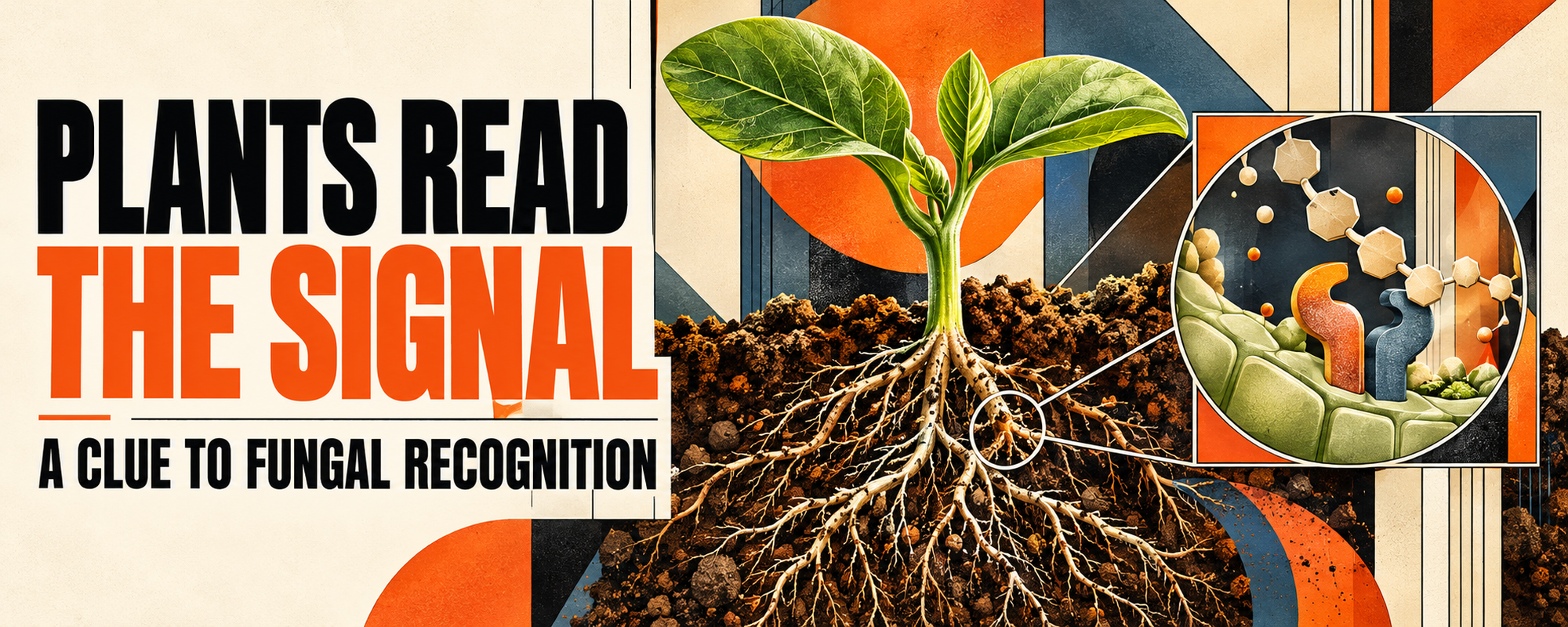
What happened: Aarhus researchers report how the CHIP13 receptor favors longer chitin fragments associated with fungal attack. A second receptor, CERK6, helps pass the signal onward. Their university account dates the Science publication to October 15.
Why it matters: A plant's defense system needs discrimination. Helpful microbial partnerships are worth keeping too.
What friction it removes: The work explains part of the handoff between recognizing a molecular pattern and triggering a response. That's a more specific starting point for future crop research.
What to keep sober: This is mechanistic research in legumes, not a field trial showing higher harvests or lower pesticide use. The university article is dated October 9; the new journal publication is the event being counted. Earlier work existed before this week.
The abundance signal: Understanding the machinery gives breeders and researchers something to test. The farm still gets the final vote.
Source: Aarhus University, October 9, 2026; reporting Science publication October 15
2. A robotic material finds a shared rhythm

What happened: An October 14 Nature paper demonstrates coordinated oscillations emerging in active mechanical structures. Birmingham describes a 37-unit honeycomb and a 24-unit motorized ring, with movement organizing through deliberately asymmetric interactions between neighboring parts.
Why it matters: This suggests another route to controlling how flexible machines move: build useful coordination into the interactions among their parts.
What friction it removes: It offers a way to generate collective motion without separately commanding every component from a central controller.
What to keep sober: These structures still use power, sensors, electronics and engineered control rules. “Time crystal” doesn't mean free energy. Practical locomotion, useful work and durable three-dimensional machines remain future tests.
The abundance signal: A new design principle can expand what engineers can build. First, make it do a job outside the demonstration.
Source: University of Birmingham, October 14, 2026; Nature, October 14, 2026
3. Scientific tools need scientists who can afford to use them

What happened: Google DeepMind and Google Cloud's October 14 pledge offers up to 200 European scientific researchers frontier-model access and $3 million in compute credits, supporting the EU's RAISE initiative. Named tools include AlphaFold 3, WeatherNext, AlphaGenome, AlphaEvolve and AlphaEarth Foundations.
Why it matters: Having a promising research question is less useful when the computing bill stops the experiment.
What friction it removes: Credits and access can lower an immediate resource barrier for selected teams.
What to keep sober: This is a pledge, not evidence of completed allocations or discoveries. Two hundred seats is selective access, not universal access. The announcement doesn't settle long-term cost, data terms or reproducibility after the credits expire.
The abundance signal: Cloud tools can be worth using. Keep asking whether researchers retain usable results and choices afterward; use local tools where they're sufficient. “Free for now” deserves a calendar reminder.
Source: Google, October 14, 2026
4. An optical alphabet gets a better reader

What happened: Wits researchers demonstrated a detector for topological patterns in structured light. Their October 13 report describes recognizing 81 structures within the studied family after training on 15 examples, including previously unseen patterns. The paper was published October 7.
Why it matters: Encoding information in clever light patterns only helps if a receiver can distinguish them.
What friction it removes: Optical layers direct light toward detectors, extracting the relevant information without first reconstructing a detailed image.
What to keep sober: This is a specialized experiment, not a general AI computer or a faster internet service. It establishes no household speed or energy saving. The paper falls nine days before this issue; included as a two-day window exception, within 30 days, alongside the fresh university explanation.
The abundance signal: A better measurement tool can make another line of engineering possible. The receiver deserves some attention too.
Source: Wits University, October 13, 2026; Nature Communications, October 7, 2026
Why This Matters
The connecting thread is the handoff. A treatment needs an eligibility decision. A plant needs to recognize a warning. Mechanical parts need to coordinate. A researcher needs access. An optical signal needs a reader. Inventing a capability leaves plenty of useful work for whoever makes the next step happen.
Those steps also have different gatekeepers. Patients depend on clinical judgment, monitoring and affordable care. Crop applications need validation and whatever approvals a particular intervention requires. Robotic and optical hardware need repeatable engineering. Scientific access depends on selection, terms and continuing resources. We should ask institutions to make those handoffs work, then judge the result. A press release has excellent uptime. Reality is a fussier customer.
Abundance Index Score
This week's score: 76/100
Last week: 78/100
Change: -2
Why the score fell: Issue 18 included commissioned electricity infrastructure and a substantial clinical readout. This selection has an actionable regulatory change, but more of its weight sits in experimental mechanisms and a resource pledge. The comparison follows Issue 18 on the public site; Substack's latest is still Issue 17 at 77.
Why the score is not higher: Availability, affordability, independent replication and useful work remain open. The research doesn't establish better harvests, productive robots or faster consumer communications, and pledged access hasn't yet produced a measured outcome. The optical paper also sits just outside the preferred weekly window.
Score interpretation: An editorial judgment about the strength and practical reach of this issue's evidence, not a measured change in global wellbeing.
Looking Ahead
How will the expanded bladder-cancer indication translate into appropriate access and long-term outcomes?
Can the plant-receptor findings guide an intervention that helps crops under field conditions?
Can the robotic material produce controllable, useful motion in a durable three-dimensional structure?
Who receives the compute access, under what terms, and what reproducible results follow?
Will the optical detector work across more realistic transmission conditions and a broader range of inputs?
Closing Reflection
A treatment option reaches another group.
A plant's warning system becomes a little less mysterious.
Mechanical parts find a rhythm.
Scientific tools get a proposed route into more hands.
A signal gets a reader.
Progress becomes useful when somebody finishes the next step.
Source Notes and Fact-Check
Bladder cancer: October 14 approval verified; extrapolation distinguished from a new comparative trial, with the surgery-delay warning retained. FDA, October 14, 2026; verified October 16, 2026
Plant recognition: university article dated October 9 explicitly reports journal publication October 15; mechanism distinguished from crop performance. Publisher full text wasn't retrievable; account relies on the research institution. Aarhus University, October 9, 2026; verified October 16, 2026
Robotic material: October 14 paper and institutional report checked; powered laboratory coordination, not demonstrated practical autonomy. Publisher-indexed abstract checked; full publisher page couldn't be fetched. University of Birmingham, October 14, 2026; verified October 16, 2026; Nature, October 14, 2026; verified October 16, 2026
Scientific access: October 14 company pledge verified; amounts and cap retained, with no claim that credits were already allocated. Google, October 14, 2026; verified October 16, 2026
Optical detector: October 13 report checked against publisher-indexed abstract and visible October 7 publication date. Nine-day-old paper is an explicit two-day exception to the seven-day preference, included for its concrete detector demonstration and fresh explanation; within 30 days. Full publisher page couldn't be fetched. Wits University, October 13, 2026; verified October 16, 2026; Nature Communications, October 7, 2026; verified October 16, 2026